
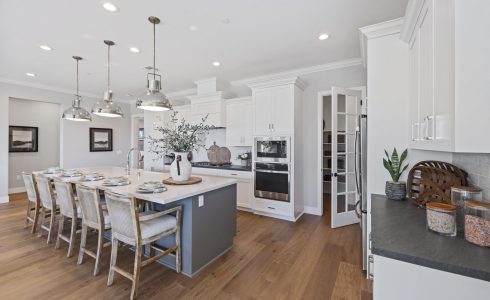
They say the kitchen is the heart of the home, but anyone who has tried to cook Thanksgiving dinner in a cramped, poorly designed space knows it can quickly become the headache of the home, too. That’s why understanding the most popular kitchen layouts is essential before choosing a home or planning a renovation.
When walking into a potential new house, it’s easy to get distracted by the shiny things. The farmhouse sink, the quartz countertops, the smart refrigerator that can seemingly do everything but drive you to work; these features grab your attention immediately. But if you strip away the finishes, you are left with the skeleton of the room: the layout.
The layout is the single most important factor in determining whether you will love cooking in your kitchen or dread stepping foot in it. It dictates traffic flow, efficiency, and how sociable the space feels. We discuss the most popular kitchen layouts to help you decide which one truly matches your lifestyle.
Why Layout Matters More Than Look
Before diving into the shapes, let’s talk about the “why.” A kitchen is a workspace. In design terms, we often talk about the “Work Triangle.” This is the imaginary line drawn between your three main work centers:
- The Sink (Prep and cleanup)
- The Stove (Cooking)
- The Refrigerator (Storage)
In a well-designed kitchen, the distance between these three points should be comfortable; not so far that you are exhausted walking between them, but not so close that you feel cramped. If the layout is bad, you will find yourself constantly bumping into open dishwasher doors or walking across the room just to throw away a wrapper.
Here are five of the most popular kitchen layouts you’ll encounter in modern homes, along with who each one works best for.
1. The Mighty L-Shaped Kitchen Layout
The L-shaped kitchen is a champion of versatility. As the name suggests, it uses two perpendicular walls to create an ‘L’ shape. This layout is incredibly common because it works beautifully in both small and medium-sized spaces.
Why people love it:
- Open concept friendly: It naturally opens up to a dining or living area, making it perfect for families who want to stay connected while cooking.
- Traffic control: Since the work area is tucked into a corner, people walking through the house won’t cut right through your cooking zone.
- Space for an island: If you have enough floor space, an L-shape pairs perfectly with a central island for extra prep space or seating.
Best for: Small to medium families and open-plan homes. If you love entertaining but don’t want to be locked away in a separate room while you cook, this is a strong contender.
2. The Efficient Galley Kitchen
Named after the compact cooking areas on ships, the galley kitchen consists of two parallel runs of units forming a central corridor. While some people think “cramped” when they hear galley, smart designers know it as the most efficient layout for serious cooks.
Why people love it:
- Everything is within reach: You rarely have to take more than a step or two to reach the sink, stove, or refrigerator. It’s highly ergonomic.
- Maximizes vertical space: Because floor space is limited, these kitchens often utilize tall cabinets, giving you plenty of storage without a large footprint.
- No dead corners: Unlike L or U-shaped kitchens, you don’t have to deal with those awkward corner cabinets where Tupperware goes to disappear forever.
Best for: Efficiency lovers, smaller homes, and avid cooks who prioritize function over socializing space. It’s a “cockpit” style kitchen where you can really get to work.
3. The Spacious U-Shaped Kitchen (Horseshoe)
The U-shaped kitchen occupies three walls, surrounding the cook on three sides. It offers a massive amount of counter space and cabinetry.
Why people love it:
- Counter space galore: If you love spreading out while baking or have multiple appliances like stand mixers and blenders, this layout gives you the room to keep them out.
- Traffic safety: Because it’s closed off on three sides, it keeps wandering guests, toddlers, and pets out of your dangerous work zone while you are handling hot pans.
- Great for multiple cooks: If the U is wide enough, two people can work in different zones (like prep vs. cooking) without bumping elbows constantly.
Best for: Larger families and serious bakers. It requires a bit more square footage to ensure the middle area doesn’t feel tight, but the storage payoff is huge.
4. The Minimalist Single-Wall Kitchen Layout
Often found in studio apartments or lofts, the single-wall kitchen places all cabinets and appliances along one wall. It’s the ultimate space-saver.
Why people love it:
- Saves floor space: It leaves the rest of the room completely open, which is crucial in smaller living quarters.
- Lower cost: Fewer cabinets and countertops generally mean a less expensive renovation or build cost.
- Modern aesthetic: It fits well with sleek, minimalist design trends where the kitchen is designed to blend into the living space rather than dominate it.
Best for: Singles, couples, loft dwellers, or anyone with limited square footage. To make it work efficiently, you often need a movable island or a dining table that doubles as a prep surface.
5. The Expansive G-Shaped Kitchen
Think of this as a U-shaped kitchen with an extra limb. The “G” shape adds a peninsula (a connected island) to one end of the U. It essentially closes off the kitchen even more, creating a very distinct zone.
Why people love it:
- Maximum storage: This layout utilizes almost every inch of available wall and floor space for cabinets.
- Built-in seating: The peninsula leg of the “G” is the perfect spot for bar stools, allowing family to sit and chat without being in the way of the cook.
- Defined boundary: In an open floor plan, it creates a clear separation between the kitchen and the living room without putting up a wall.
Best for: Large kitchens where you want the functionality of an island but don’t quite have the width for a floating one. It’s excellent for large families who congregate in the kitchen.
Practical Advice: How to Choose the Right Kitchen Layout
Knowing the shapes is one thing, but knowing which one fits your life is another. Choosing among these popular kitchen layouts comes down to how you cook, move, and live in your space. When touring a new home or planning a renovation, ask yourself these three practical questions.
1. How many cooks are in the kitchen?
If you and your partner cook dinner together every night, a narrow Galley or a tight U-shape might lead to arguments and bumped hips. You need width. An L-shape with an island or a wide U-shape allows for multiple work zones so you can chop veggies while someone else handles the stove.
2. What is your “Traffic Tolerance”?
Do you mind if kids run through the kitchen while you have a pot of boiling water on the stove? If that stresses you out, avoid pass-through layouts like the Galley or an open L-shape. A U-shape or G-shape creates a “dead-end,” which naturally keeps running feet out of the danger zone.
3. What are your storage needs?
Be honest about your kitchen gear. Do you own an air fryer, a pressure cooker, a bread maker, and a 12-piece pot set? A Single-wall layout will frustrate you immediately. Look for U-shaped or G-shaped layouts that prioritize cabinetry. If you are a minimalist who relies on a few good knives and one skillet, you can opt for more open, airy layouts.
Finding the Perfect Kitchen Layout
The best option among popular kitchen layouts doesn’t exist in a vacuum. The single-wall kitchen that works perfectly for a busy young professional in a downtown loft would be a disaster for a family of five who cooks three meals a day.
When you walk into a potential new home, don’t just look at the granite countertops. Walk into the kitchen. Stand at the stove. Imagine reaching for the fridge. Picture where your family will sit. If the flow feels right and the movement feels natural, you’ll know you’ve found the heart of your new home.
FCB Homes designs landmark developments in Lodi filled with beautiful new homes and a strong sense of community. Visit us online at FCBHomes.com to learn more about our new home communities. Our dedicated team is here to guide you every step of the way in finding the perfect place to call home.